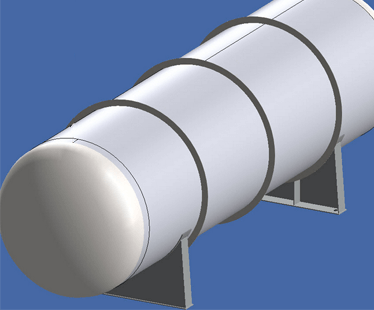
Equipos fijos en servicio de alta temperatura (Creep)

Creep es un modo de fallo dependiente del tiempo y de la alta temperatura que limita la vida de los componentes sometidos a tensión. Los fallos de Creep suelen limitar la vida útil de los tubos de los calentadores, pero pueden ser el modo de fallo que gobierna cualquier recipiente o tubería a presión de alta temperatura. La temperatura a la que creep se convierte en un problema depende del material y, por lo general, se sitúa en torno a los 700 grados F. para los aceros al carbono. Las tensiones admisibles (de tracción) del Código ASME tienen en cuenta la creep asumiendo una vida útil de 100.000 horas y limitando las tensiones admisibles de forma que la deformación por fluencia (strain) no supere el 1%. Nótese también que las tablas de presión externa del Código ASME no consideran el pandeo creep y no se utilizan en estos rangos de temperatura.
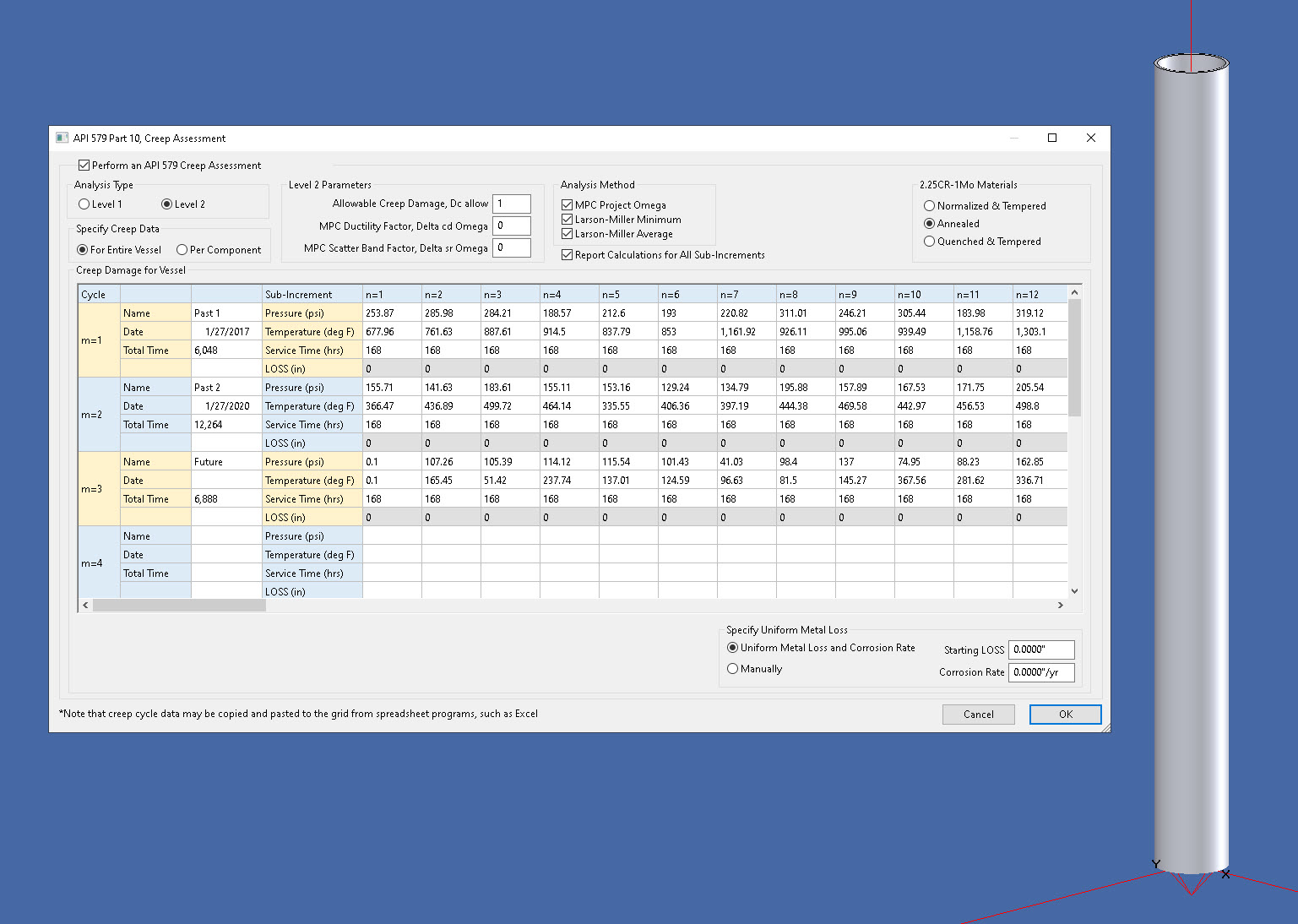
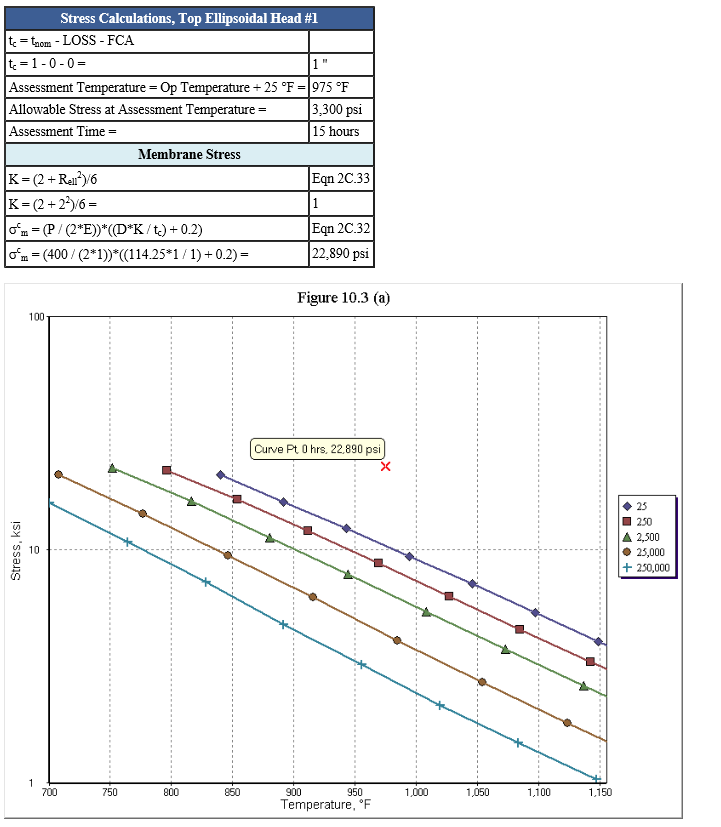
INSPECT hace que la realización de las evaluaciones Creep de nivel 1 y 2 de la Parte 10 sea fácil y rápida. Todos los cálculos de la API 579 están detallados.
INSPECT realiza evaluaciones Creep de la Parte 10 y produce informes API 579 detallados

Evaluación de daños INSPECT y Creep Parte 10

INSPECT hace que la realización de las evaluaciones creep de nivel 1 y 2 de la Parte 10 sea fácil y rápida. Proporciona un medio coherente para registrar los historiales de funcionamiento y los cálculos de los equipos. Todos los cálculos se detallan junto con los gráficos asociados. Además, no tiene que dedicar su tiempo a mover la información entre los programas manualmente para crear informes. El sistema «todo en uno» de INSPECT crea informes detallados de aspecto profesional con un solo clic.

Se pueden modelar y evaluar componentes individuales o recipientes completos según sea necesario. Un práctico informe resumen del creep enumera los componentes incluidos junto con las conclusiones aplicables de Aprobado/Suspendido. Para el nivel 2 están disponibles los métodos MPC Project Omega, Larson-Miller Minimum y Larson-Miller Average, que pueden ejecutarse al mismo tiempo y proporcionar un informe muy completo.

Realización de evaluaciones de daños API 579 Parte 10 Creep con INSPECT

Puede encontrar más información sobre Creep en:

Creep y Creep Failures by The National Board of Boiler and Pressure Vessel Inspectors

CREEP en tubos de calentadores y otros componentes por Inspectioneering

Capacidades destacadas de INSPECT

API 579 Part 3 Ensure your operating procedures limit the risk of brittle fracture by automatically running Part 3 assessments. API 579 Part 4 & 5 Perform general and local metal loss assessments and quickly generate detailed reports. API 579 Part 6 INSPECT performs level 1, 2 and 3 pitting assessments and generates detailed API 579 reports with a click of a button. API 579 Part 7 Perform Level 1 and 2 assessments from Hydrogen Induced Cracking (HIC) and Hydrogen Blister damage. API 579 Part 8 Ensure that vessels subject to external pressure are within the allowed roundness tolerance with out-of-roundness assessments. API 579 Part 9 Level 1 and 2 assessments quickly determine which crack-like flaws can be safely left in service and which require more investigation. API 579 Part 10 Perform creep damage assessments by recording equipment operating histories and calculations. API 579 Part 11 Perform fire damage assessments and document conclusions in a consistent series of data entries and reports. API 579 Part 12 Perform Part 12 assessments and generate detailed API 579 reports. Level 1 and 2 dent, gouge and dent-gouge combinations are available. API 579 Part 13 Model laminations and provide rapid results so you can make the necessary mediation decisions with confidence API 579 Part 14 INSPECT’s fatigue assessment scans the vessel for other flaw types and allows the user to adjust the “remaining strength factor” (RSF) as required by API 579. API 510 Address in-service activities such as inspection, remaining life determination and repair. API 570 3D inspection data management and calculations simplify compliance with the requirements of the API-570 Code. API 653 Track tank thickness inspection measurements and provide calculation reports. Gage Integration Set up and retrieve inspection grids from thickness gages fast and easy. OSHA 1910 Meet the Mechanical Integrity requirements of OSHA1910.119 (j) and EPA Title 40 part 68.73. Undocumented Vessels Pressure Vessel Inspection Code requires owners to maintain permanent, progressive records as listed in API 510 Section 7.8 The INSPECT IDMS Show condition monitoring locations (CML’s) and API 579-1 flaws directly on pressure equipment models. Auto-Refrigeration MAT curves are employed to determine which process conditions put equipment at risk of failure by brittle fracture. Old ASME® Codes Supported Increase vessel life automatically by using the higher allowable stresses per NBIC Section 3.4. Pressure Relieving Devices Easily model pressure relieving devices (PRDs) on your fixed equipment. Excel Integration Export and import thickness inspection grids to and from Microsoft Excel. API 579-1 Part 3 MAT Curves API 510 API 570 API 653 Storage Tank Evaulations Thickness Gage Integration in INSPECT OSHA standards in COMPRESS Undocumented Vessels in INSPECT Inspection Data Monitoring System IDMS API 579 Part 9 Codes menu Combined Pitting and Local Metal Loss Flaws are Considered API 579-1 Part 12 dialog INSPECT performs API 579 FFS assessments and shows flaws on the 3D model Minimum Safe Operating Temperature (MSOT) curve in INSPECT API 579-1 Part 10 Creep Damage API 579-1 Part 11 Fire Damage Assessments API 579-1 Part 8 Out of Roundness Easily model pressure relieving devices (PRDs) with INSPECT Excel Integration with INSPECT API 579-1 Part 7 Hydrogen Cracking and Blister Damage API 579-1 Part 13 Lamination Diagram API 579 Part 14 Fatigue - Pressure Fluctuation Cycle