API 579 Part 4 and Part 5 – General and Local Metal Loss

Metal loss is one of the most common flaws encountered in service.  INSPECT addresses metal loss with its rigorous API 579-1 general and local metal loss assessments and detailed reports.  INSPECT’s 3D models take the guess work out of verifying that the metal loss has been correctly entered.  Since other flaws such as pitting are often present within metal loss regions, INSPECT detects pitting overlaid onto the metal loss and factors this in accordingly.  INSPECT covers:

  • Level 1 and 2 assessments for both Part 4 and Part 5.

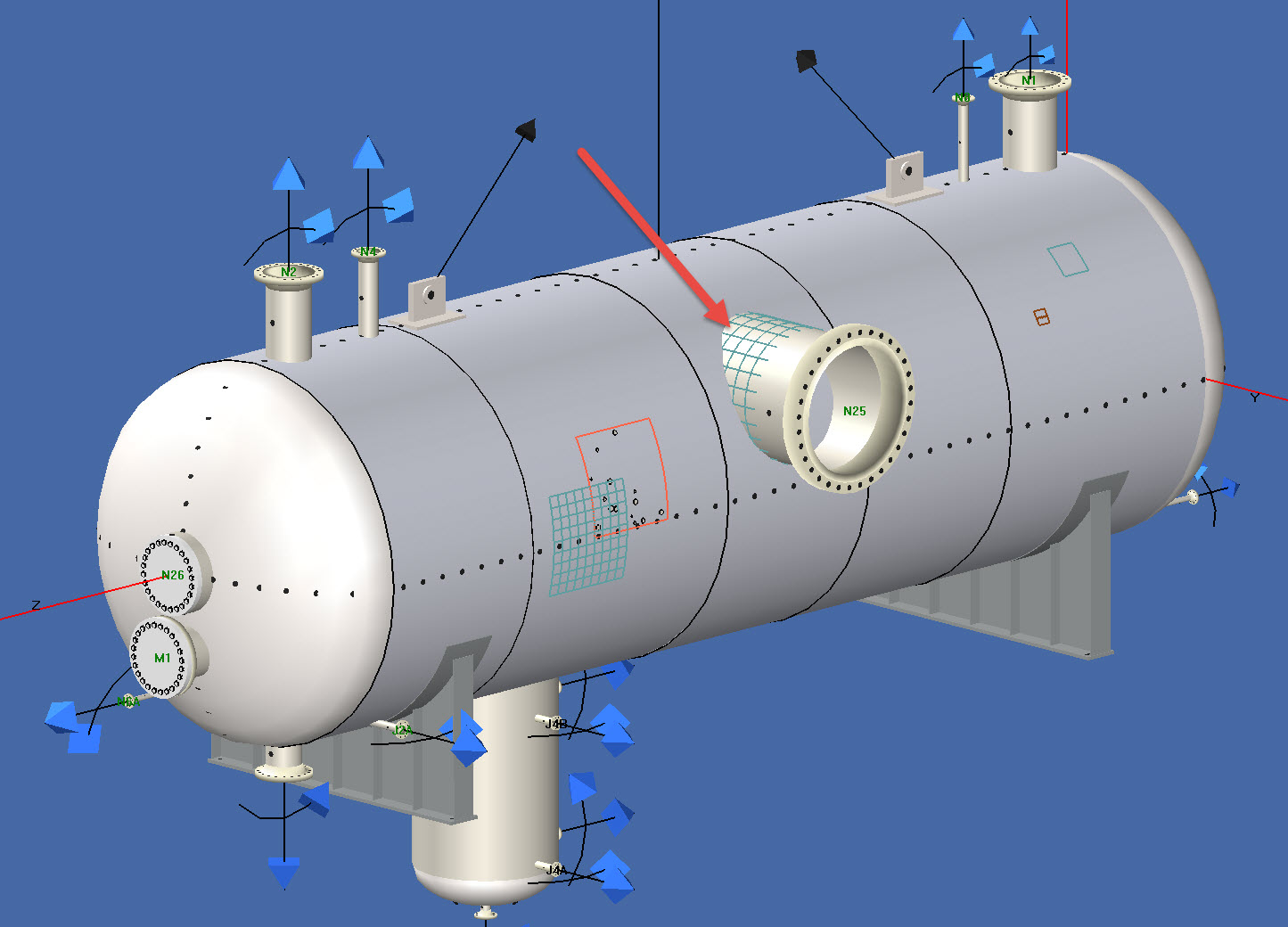
  • Local metal loss assessments for nozzles.  These Level 2 assessments follow the rules of  API 579, Part 4 (4.4.3.3).  INSPECT’s 3D modeling capabilities simplify this process providing concise nozzle assessments quickly.

  • Supplemental loads due to wind, seismic, weight, liquid contents, lateral forces and vertical loads.  These are automatically considered for Part 4, Level 2 assessments.

  • Integration with Olympus Data loggers (read/write capabilities) for enhanced productivity.

Part 5 – Groove-like Flaws

API 579 Part 5 groove-like flaw assessments can be utilized in INSPECT to perform “What if” scenarios for possible remedies to flawed areas.  For example, would the flaw pass assessment if the crack or metal loss was ground into a groove-like flaw?  Groove-like flaws may be combined with pitting damage (Part 6) as well.
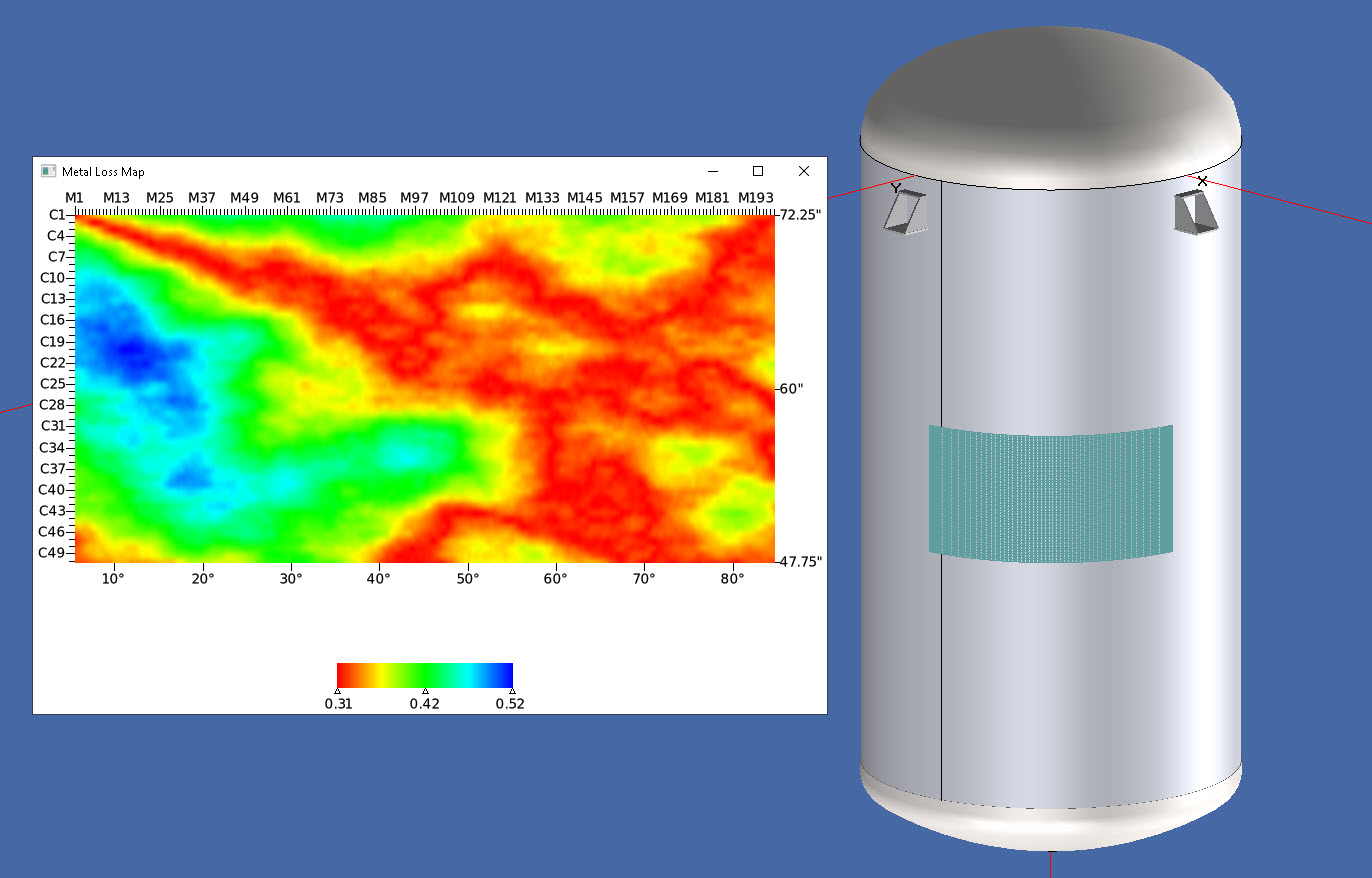
An INSPECT API 579 Part 5 Local Metal Loss Map

Create Detailed Part 4 and Part 5 Reports

INSPECT quickly generates metal loss assessment reports.  INSPECT reports contain a full audit trail of all API 579 calculations performed including equations and tables referenced.  Other engineering highlights include:

  • PTR (point thickness reading) and CTP (critical thickness profile) assessments.

  • CTP values may be entered manually or input via a measurement grid.  Grids calculate the CTP values automatically.

  • Scaled grids are shown on the 3D model to represent areas of metal loss.

  • Visual representations of CTP profiles are given in the report and dialog.

  • Calculations from API 579 Annex A along with ASME Section VIII Division 1 are used to evaluate the flaw.  ASME Section VIII Division 2 equations can be used.

  • Part 5 metal loss reports with plots of the remaining strength factor (RSF) and interpolated tensile strength factor (TSF) for each flaw.

  • Joint efficiencies may be defined for each flaw’s location.

How to Perform Part 5 Local Metal Loss Assessments in INSPECT

More Information on Metal Loss Can be Found at:

Increase Your Capabilities With INSPECT

API 579 Part 3 Ensure your operating procedures limit the risk of brittle fracture by automatically running Part 3 assessments. API 579 Part 4 & 5 Perform general and local metal loss assessments and quickly generate detailed reports. API 579 Part 6 INSPECT performs level 1, 2 and 3 pitting assessments and generates detailed API 579 reports with a click of a button. API 579 Part 7 Perform Level 1 and 2 assessments from Hydrogen Induced Cracking (HIC) and Hydrogen Blister damage. API 579 Part 8 Ensure that vessels subject to external pressure are within the allowed roundness tolerance with out-of-roundness assessments. API 579 Part 9 Level 1 and 2 assessments quickly determine which crack-like flaws can be safely left in service and which require more investigation. API 579 Part 10 Perform creep damage assessments by recording equipment operating histories and calculations. API 579 Part 11 Perform fire damage assessments and document conclusions in a consistent series of data entries and reports. API 579 Part 12 Perform Part 12 assessments and generate detailed API 579 reports. Level 1 and 2 dent, gouge and dent-gouge combinations are available. API 579 Part 13 Model laminations and provide rapid results so you can make the necessary mediation decisions with confidence API 579 Part 14 INSPECT’s fatigue assessment scans the vessel for other flaw types and allows the user to adjust the “remaining strength factor” (RSF) as required by API 579. API 510 Address in-service activities such as inspection, remaining life determination and repair. API 570 3D inspection data management and calculations simplify compliance with the requirements of the API-570 Code. API 653 Track tank thickness inspection measurements and provide calculation reports. Gage Integration Set up and retrieve inspection grids from thickness gages fast and easy. OSHA 1910 Meet the Mechanical Integrity requirements of OSHA1910.119 (j) and EPA Title 40 part 68.73. Undocumented Vessels Pressure Vessel Inspection Code requires owners to maintain permanent, progressive records as listed in API 510 Section 7.8 The INSPECT IDMS Show condition monitoring locations (CML’s) and API 579-1 flaws directly on pressure equipment models. Auto-Refrigeration MAT curves are employed to determine which process conditions put equipment at risk of failure by brittle fracture. Old ASME® Codes Supported Increase vessel life automatically by using the higher allowable stresses per NBIC Section 3.4. Pressure Relieving Devices Easily model pressure relieving devices (PRDs) on your fixed equipment. Excel Integration Export and import thickness inspection grids to and from Microsoft Excel. API 579-1 Part 3 MAT Curves API 510 API 570 API 653 Storage Tank Evaulations Thickness Gage Integration in INSPECT OSHA standards in COMPRESS Undocumented Vessels in INSPECT Inspection Data Monitoring System IDMS API 579 Part 9 Codes menu Combined Pitting and Local Metal Loss Flaws are Considered API 579-1 Part 12 dialog INSPECT performs API 579 FFS assessments and shows flaws on the 3D model Minimum Safe Operating Temperature (MSOT) curve in INSPECT API 579-1 Part 10 Creep Damage API 579-1 Part 11 Fire Damage Assessments API 579-1 Part 8 Out of Roundness Easily model pressure relieving devices (PRDs) with INSPECT Excel Integration with INSPECT API 579-1 Part 7 Hydrogen Cracking and Blister Damage API 579-1 Part 13 Lamination Diagram API 579 Part 14 Fatigue - Pressure Fluctuation Cycle