MAT – Minimum Allowable Temperature

INSPECT and Auto-Refrigeration

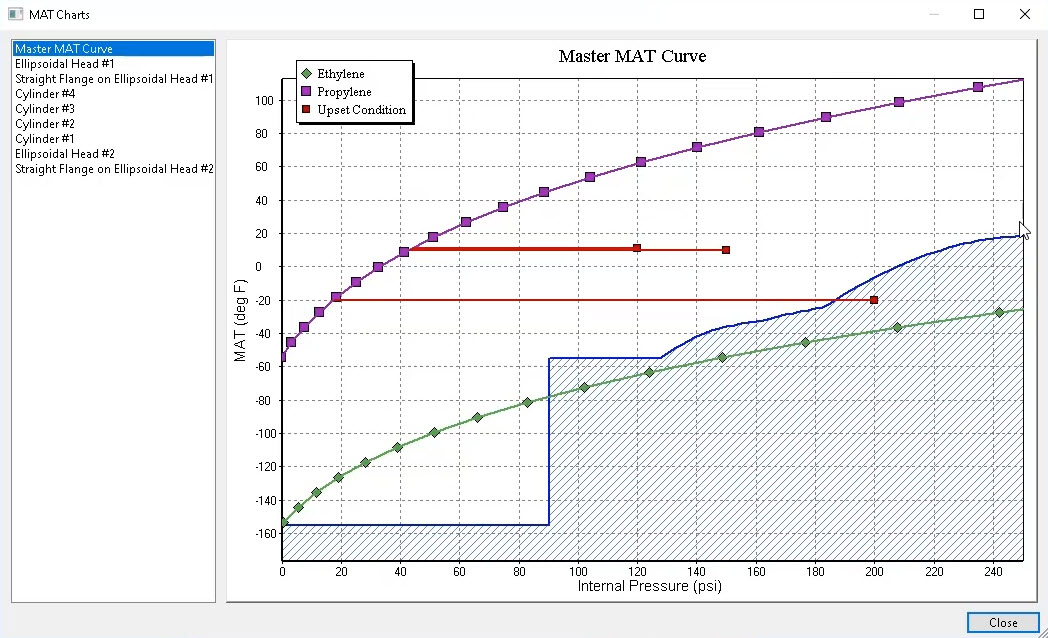
Minimum Allowable Temperature (MAT) curves, also referred to as Minimum Pressurization Temperature (MPT) curves, are used to ensure that carbon steel equipment can safely operate when exposed to low temperature conditions. Common applications include the olefin and hydrocarbon processing industries where safety concerns created by auto-refrigeration may occur. MAT curves are employed to determine which process conditions put equipment at risk of failure by brittle fracture. They are created by performing API 579 Part 3 assessments for all pressure-temperature conditions expected in service. Because of the number of calculations required, this has historically been an expensive, time consuming task. INSPECT automates this RAGAGEP procedure and shows how process conditions interact with the equipment’s Minimum Allowable Temperature (MAT).

INSPECT’s MAT Curve Benefits
  • MDMT (minimum design metal temperature) data may not be  available for old or undocumented vessels. Creating a MAT curve with INSPECT solves this problem quickly.

  • INSPECT’s MAT curves are plotted against process Vapor Pressure Curves.  This information can then be used for creating integrity operating windows (IOW’s).

  • Reduces time and expense when creating MAT’s manually or through outsourcing to 3rd parties.  They can also be used to validate newly acquired older plants. In this context, older refers to facilities constructed prior to 1987, the year ASME rules for brittle fracture were introduced.

INSPECT Includes an Extensive Vapor Pressure Curve Library

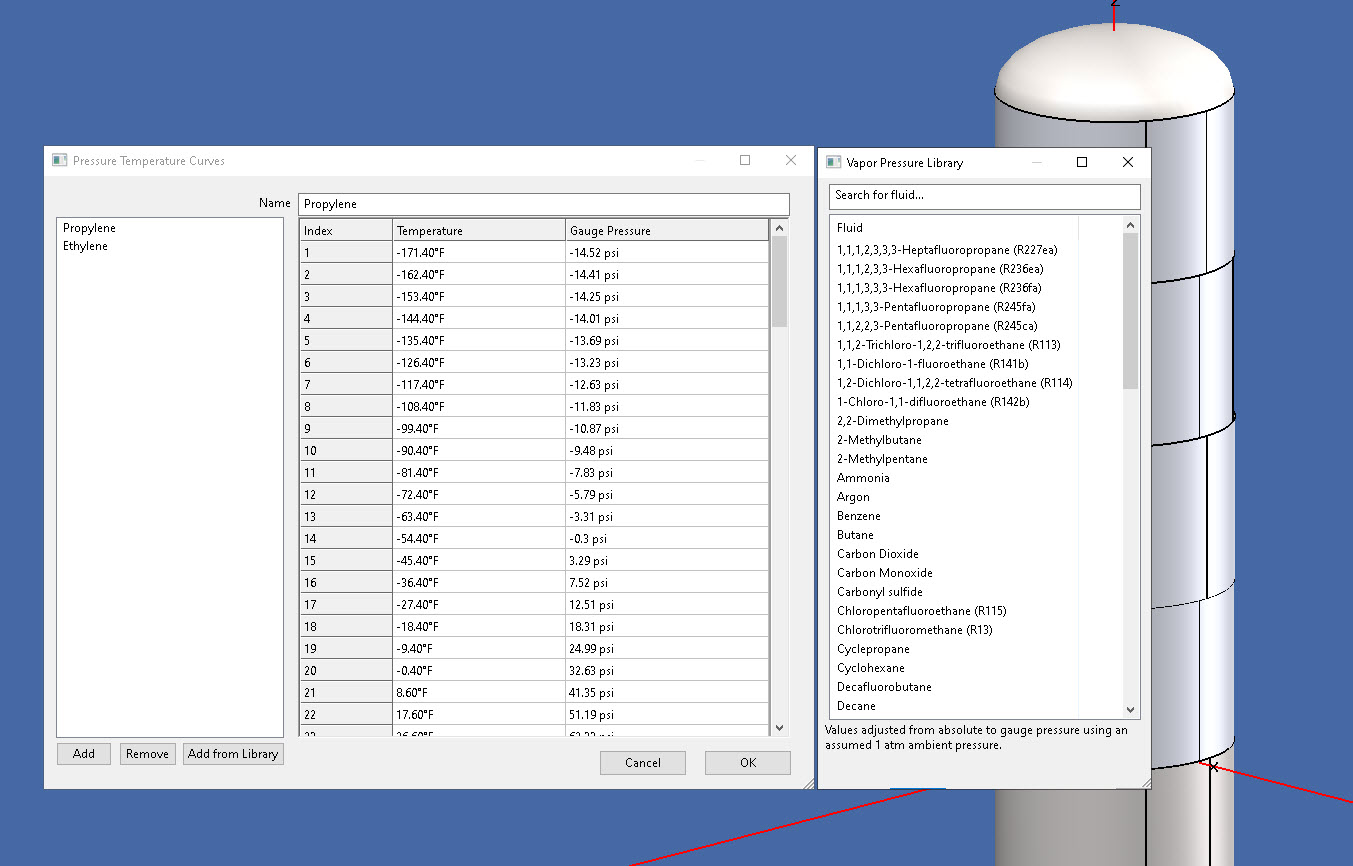
Vapor Pressure Curves

Vapor Pressure Curves are sources of process information used by INSPECT to help determine a critical region of the integrity operating window. INSPECT combines equipment MAT and Vapor Pressure Curves to help operators consider the risk of auto refrigeration induced brittle fracture and ensure safe operations.

INSPECT provides a Vapor Pressure Curves library that covers fluids commonly used in the process industries. In Addition, INSPECT includes the ability to specify custom Vapor Pressure Curves. INSPECT plots the selected Vapor Pressure Curves on the MAT curve to identify process conditions that exceed the equipment’s MAT.

In addition to being plotted in the MAT, Vapor Pressure Curves in tabular form are also presented in the summary report.

Creating a Master MAT Curve in INSPECT

More information on auto-refrigeration and brittle fracture can be found at:

INSPECT Featured Capabilities

API 579 Part 3 Ensure your operating procedures limit the risk of brittle fracture by automatically running Part 3 assessments. API 579 Part 4 & 5 Perform general and local metal loss assessments and quickly generate detailed reports. API 579 Part 6 INSPECT performs level 1, 2 and 3 pitting assessments and generates detailed API 579 reports with a click of a button. API 579 Part 7 Perform Level 1 and 2 assessments from Hydrogen Induced Cracking (HIC) and Hydrogen Blister damage. API 579 Part 8 Ensure that vessels subject to external pressure are within the allowed roundness tolerance with out-of-roundness assessments. API 579 Part 9 Level 1 and 2 assessments quickly determine which crack-like flaws can be safely left in service and which require more investigation. API 579 Part 10 Perform creep damage assessments by recording equipment operating histories and calculations. API 579 Part 11 Perform fire damage assessments and document conclusions in a consistent series of data entries and reports. API 579 Part 12 Perform Part 12 assessments and generate detailed API 579 reports. Level 1 and 2 dent, gouge and dent-gouge combinations are available. API 579 Part 13 Model laminations and provide rapid results so you can make the necessary mediation decisions with confidence API 579 Part 14 INSPECT’s fatigue assessment scans the vessel for other flaw types and allows the user to adjust the “remaining strength factor” (RSF) as required by API 579. API 510 Address in-service activities such as inspection, remaining life determination and repair. API 570 3D inspection data management and calculations simplify compliance with the requirements of the API-570 Code. API 653 Track tank thickness inspection measurements and provide calculation reports. Gage Integration Set up and retrieve inspection grids from thickness gages fast and easy. OSHA 1910 Meet the Mechanical Integrity requirements of OSHA1910.119 (j) and EPA Title 40 part 68.73. Undocumented Vessels Pressure Vessel Inspection Code requires owners to maintain permanent, progressive records as listed in API 510 Section 7.8 The INSPECT IDMS Show condition monitoring locations (CML’s) and API 579-1 flaws directly on pressure equipment models. Auto-Refrigeration MAT curves are employed to determine which process conditions put equipment at risk of failure by brittle fracture. Old ASME® Codes Supported Increase vessel life automatically by using the higher allowable stresses per NBIC Section 3.4. Pressure Relieving Devices Easily model pressure relieving devices (PRDs) on your fixed equipment. Excel Integration Export and import thickness inspection grids to and from Microsoft Excel. API 579-1 Part 3 MAT Curves API 510 API 570 API 653 Storage Tank Evaulations Thickness Gage Integration in INSPECT OSHA standards in COMPRESS Undocumented Vessels in INSPECT Inspection Data Monitoring System IDMS API 579 Part 9 Codes menu Combined Pitting and Local Metal Loss Flaws are Considered API 579-1 Part 12 dialog INSPECT performs API 579 FFS assessments and shows flaws on the 3D model Minimum Safe Operating Temperature (MSOT) curve in INSPECT API 579-1 Part 10 Creep Damage API 579-1 Part 11 Fire Damage Assessments API 579-1 Part 8 Out of Roundness Easily model pressure relieving devices (PRDs) with INSPECT Excel Integration with INSPECT API 579-1 Part 7 Hydrogen Cracking and Blister Damage API 579-1 Part 13 Lamination Diagram API 579 Part 14 Fatigue - Pressure Fluctuation Cycle